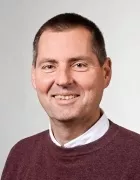
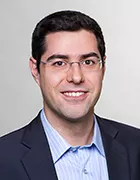
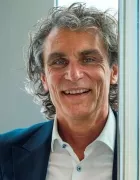
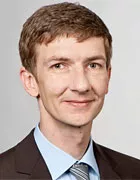
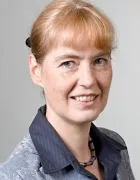
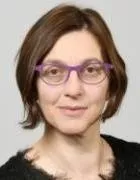
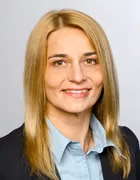
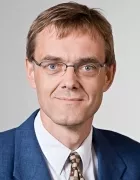
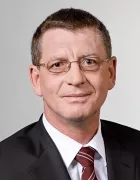
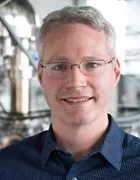
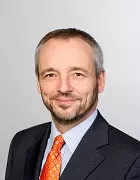
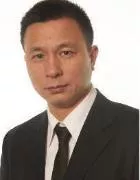
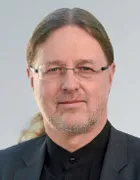
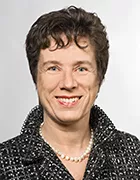
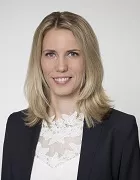
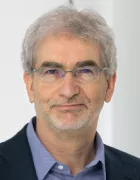
The Core Members constitute the scientific foundation of the Munich Institute of Integrated Materials, Energy and Process Engineering (MEP). A total of 57 professors of TUM belong to this group. Through their involvement in the M, E and P focus groups, they play a decisive role in shaping the scientific direction of the MEP.
With their ideas, expertise and interdisciplinary collaboration, the Core Members drive new scientific developments, design research programs and partnerships, and provide essential impulses to realize the MEP’s vision: connecting people, ideas and expertise to jointly address global challenges and translate knowledge into societal value.

MEP explores so-called 4D Materials within Focus Area M materials, whose properties change over time in response to internal or external stimuli, encompassing solid, fluid, particulate, and phase‑transforming systems. Its research centers on digitally designing such materials through multi‑scale, high‑fidelity simulations and applying them in areas like energy conversion, biotechnology, and advanced manufacturing.
The focus area also integrates additive technologies, using AI‑enhanced models and powerful numerical simulation frameworks to optimize materials and their process‑driven transformations… Learn more.
MEP develops holistic strategies for carbon‑neutral energy systems within Focus Area E by integrating material production, component manufacturing, and environmental interactions into system design. We combine system‑of‑systems analysis with the potential of 4D materials and advanced modelling methods to optimize sustainable energy conversion, storage, and supply.
We also investigate the links between energy and food production and work closely with the E‑Conversion Cluster to address future resource challenges… Learn more.
MEP generates integrated strategies for modern biomanufacturing and process systems within Focus Area P by incorporating material production, component fabrication, and the interactions of biomolecular processes into system‑level design. We combine system‑of‑systems analyses with the potential of 4D materials and advanced modeling and prediction methods to specifically optimize (bio)chemical transformations as well as the production of high‑value bioproducts and material hybrids.
In addition, we investigate the interconnections between biotechnological production, food systems, and medical applications, and work closely with partners from industrial biotechnology and medical technology to address future resource and health challenges… Learn more.